Billionaire-Netflix-cofounder-Reed-Hastings-is-leaving-the-company.jpeg

Billionaire Netflix cofounder Reed Hastings is leaving the company

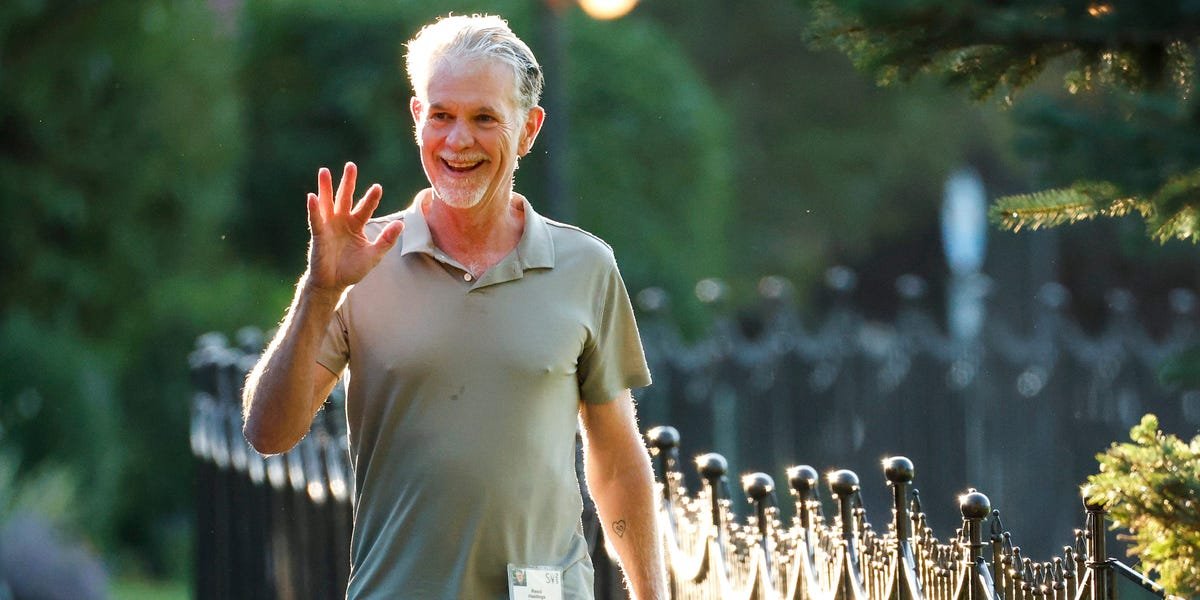
Netflix cofounder Reed Hastings will soon leave the company he helped turn from a DVD rental business into a streaming TV giant.

Hastings won’t seek reelection to Netflix’s board and will split from the company in June, Netflix said on Thursday as it shared its first-quarter earnings report.

Hastings, who was Netflix’s CEO until 2023, will focus on “philanthropy and other pursuits,” the company said. The Netflix cofounder’s philanthropy includes giving $1.1 billion to the Silicon Valley Community Foundation, a large Bay Area charity, and helping launch the Hastings Initiative for AI and Humanity at Bowdoin College.

Hastings has also been heavily involved in developing the Utah ski resort Powder Mountain.

Forbes estimates Hastings’ net worth at $5.8 billion.

“Reed built a culture of innovation, integrity and high performance that defines who we are today,” Netflix said in its first-quarter shareholder letter. “His vision and leadership pioneered how the world is entertained, and his legacy and impact are not only felt by all of us at Netflix, but by audiences around the world.”

In the shareholder letter, Hastings, who cofounded the company in 1997, said his “real contribution at Netflix wasn’t a single decision.”

“It was a focus on member joy, building a culture that others could inherit and improve, and building a company that could be both beloved by members and wildly successful for generations to come,” Hastings said in the letter.

Hastings gave a shout-out to his successors, co-CEOs Greg Peters and Ted Sarandos, “whose commitment to Netflix’s greatness is so strong that I can now focus on new things.”

Peters said in the shareholder letter that “Reed will always be Netflix’s founder and biggest champion,” adding that “his vision, entrepreneurship, and steadfast commitment to our values have shaped every stage of our journey and continue to shape how Ted and I lead Netflix today.”

Sarandos said that Hastings “has modeled for Greg and me a selfless, disciplined leadership style that will continue to shape how we lead Netflix in the exciting times ahead.”

Netflix shares fell over 9.1% in after-hours trading following its first-quarter earnings report. Its second-quarter guidance came in lower than some investors anticipated.


Source link

Netflix-CEO-Ted-Sarandos-says-he-bailed-on-WBD-because.jpeg

Netflix CEO Ted Sarandos says he bailed on WBD because of the deal’s price, not because of Donald Trump

Did Netflix walk away from Warner Bros. Discovery because of money? Or because of politics?

Money, says Netflix boss Ted Sarandos. Just money.

Sarandos, the streamer’s co-CEO, says Netflix pulled out of the WBD bidding war — ultimately won by Larry and David Ellison’s Paramount — because Netflix didn’t want to raise the price it would pay for WBD’s studio and HBO business.

The fact that the proposed Netflix/WBD deal was getting pushback from Republicans in Washington — and other regulators in the US and around the world — was not an issue, Sarandos said in an interview this weekend.

“I still believe in all the positives. I just believed in them up to $27.75 a share,” Sarandos told Bloomberg, referring to the price Netflix originally agreed to pay for WBD’s studio business and HBO unit in December.

I don’t know that Sarandos’ argument will entirely sway those who think the Ellisons’ attempts to court President Donald Trump and other Republicans had an impact on Netflix’s calculus. David Ellison, for example, attended last week’s State of the Union address as the guest of Trump ally Sen. Lindsay Graham.

Adding fuel to those theories: Netflix announced that it was withdrawing from the WBD auction shortly after Sarandos visited the White House on Thursday. But Sarandos says nothing in that meeting had anything to do with his decision. “It was a very productive meeting, nothing out of the ordinary,” he said.

Instead, Sarandos said, Netflix had already decided to bow out earlier that day, as soon as WBD told the company that Paramount’s most recent bid was a “superior proposal.” Just about everyone in the media world expected Netflix to counter that offer with a new one of their own.

But asked repeatedly about what role Trump and any other politician had in his decision, Sarandos insisted that the answer was zero.

“Things have been going exactly the way they should,” he said, arguing that “the president stayed completely neutral on this.”

This is also what Sarandos had said for the last few weeks, when asked if politics and/or Trump’s preferences would influence the deal. That made sense at the time — why complain about politics at the same time you’re trying to woo politicians?

And it may continue to make sense, given that Netflix may end up back in Washington in the future, asking for a sign-off on a different deal. (Sarandos did say it was “unlikely” he would try to buy something else in the next year or so.)

But what about Trump’s interest in the fate of CNN, which is currently owned by WBD, and which will become part of Paramount, assuming the deal closes? Trump had previously announced that it was “imperative that CNN be sold”.

Follow that idea to its logical conclusion, and it would mean that Trump would favor the Paramount bid, since it was for all of WBD, including CNN. The Netflix bid didn’t include the news network or WBD’s other basic cable channels.

“Once it was clear that we weren’t in the CNN business, it was a lot less interesting. He didn’t care that much more about our deal,” Sarandos said.

I wanted to make sure I understood what Sarandos was saying: Was it that once Trump realized Netflix didn’t want to buy CNN, he didn’t support Netflix buying any part of WBD? Or was it that once Trump realized Netflix didn’t want to buy CNN, he became less interested in its outcome, period?

The latter, a Netflix rep told me Sunday.


Source link

Trump-demand-that-Netflix-fire-Susan-Rice-is-an-extraordinary.jpeg

Trump demand that Netflix fire Susan Rice is an extraordinary use of presidential power

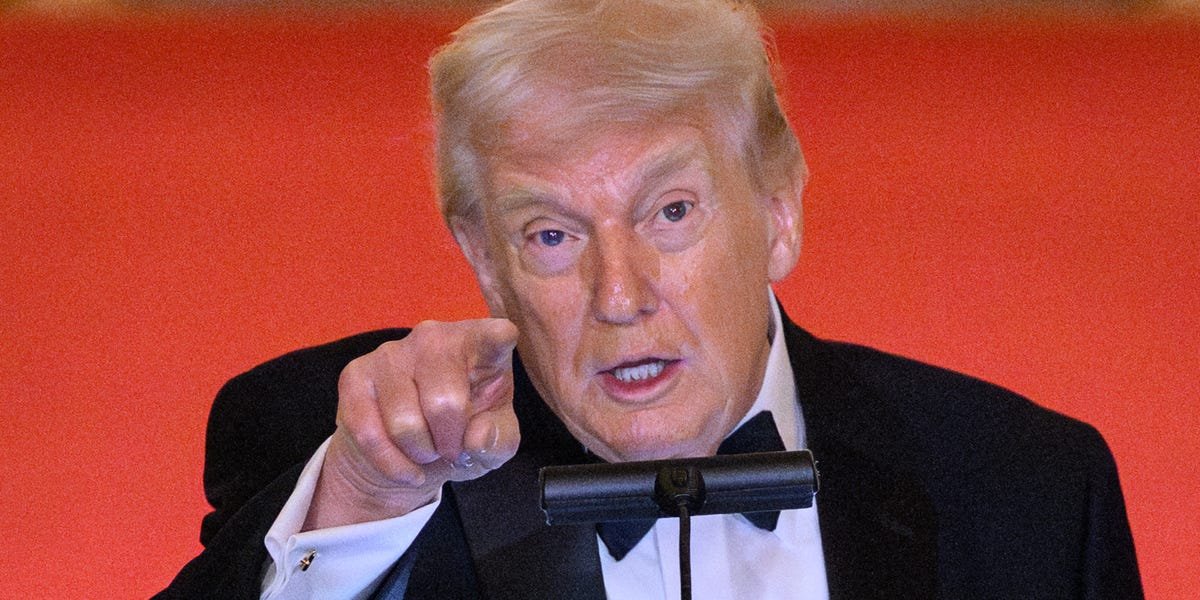
Netflix wants President Donald Trump’s stamp of approval as it maneuvers to buy Warner Bros. Discovery.

Now, Trump has a demand for Netflix: unseat board member Susan Rice.

In normal times, we would all be marveling at the spectacle of the US president telling a company in the midst of a merger fight (Paramount also wants to buy Warner Bros. Discovery) how to structure its board. During Trump 2.0, though, this has become standard stuff. Trump routinely tells companies to fire someone he doesn’t like or do something he does like.

That doesn’t mean Trump always gets what he wants. The demands alone, however, are an extraordinary use of power. We should make sure we don’t become inured to it.

Trump’s Truth Social post is a reminder that the future of Warner Bros. Discovery will run through the White House, no matter what Trump says at any given moment. (Refresher: In December, Trump said, “I’ll be involved” in the fight between Netflix and Paramount. Earlier this month, he announced that “I’ve decided I shouldn’t be involved.” Now he’s telling Netflix it will “pay the consequences” if it doesn’t fire Rice, which sure seems like he’s involved again.)

Trump himself doesn’t have the authority to stop Warner Bros. Discovery from selling itself to Netflix or Paramount, which is controlled by David Ellison and his father, the prominent Trump supporter, Larry Ellison. He can, however, instruct Attorney General Pam Bondi to sue to stop a deal on antitrust grounds.

Modern presidents have traditionally assumed an arm’s-length distance from federal law enforcement. And it’s entirely possible that any other president’s Department of Justice would also look into an antitrust case against Netflix, given its enormous market power.

Trump, however, has made it clear that he expects Bondi to act on his behalf. So if he doesn’t want Netflix to buy Warner Bros. Discovery, he can certainly make it more difficult for them.

Which makes it puzzling that Rice, who held senior roles in the Clinton, Obama, and Biden administrations, would sound off on a podcast, announcing that “elites” and “corporate interests” who accommodated Trump would one day “be held accountable by those who come in opposition to Trump and win at the ballot box.

This wasn’t a mere gaffe or misstatement. She went on at length. It was, regardless of how she intended it, a provocation aimed at the Trump White House — at the exact moment the company she’s supposed to help govern is seeking Trump’s approval.

I’ve asked Netflix for comment on Rice’s comments and Trump’s response.

We should also note that Trump’s most consistent trait is his inconsistency and that he frequently reverses himself. Last summer, for instance, he announced that Intel CEO Lip-Bu Tan was “highly CONFLICTED” and must resign. Days later, Trump met with Tan and described him as a “success.” Weeks after that, the US government acquired 10% of Intel.

Nor does Trump always follow through. Last fall, he demanded that Microsoft fire Lisa Monaco, an executive who had also worked for Clinton, Obama, and Biden. Monaco still works for Microsoft.

However, just because we don’t know how serious Trump is about pushing Rice out of Netflix — or how his administration will ultimately rule on the Netflix/Paramount race — doesn’t mean we should shrug this off.

We’re in a place where the president routinely tells companies how to run their businesses and threatens them if they don’t comply. If we get used to that, we shouldn’t be surprised when future presidents decide they can do it, too.

Disclosure: Mathias Döpfner, the CEO of Business Insider’s parent company, is a Netflix board member.


Source link

Heres-exactly-what-Susan-Rice-said-before-Trump-called-on.jpeg

Here’s exactly what Susan Rice said before Trump called on Netflix to fire her from its board.

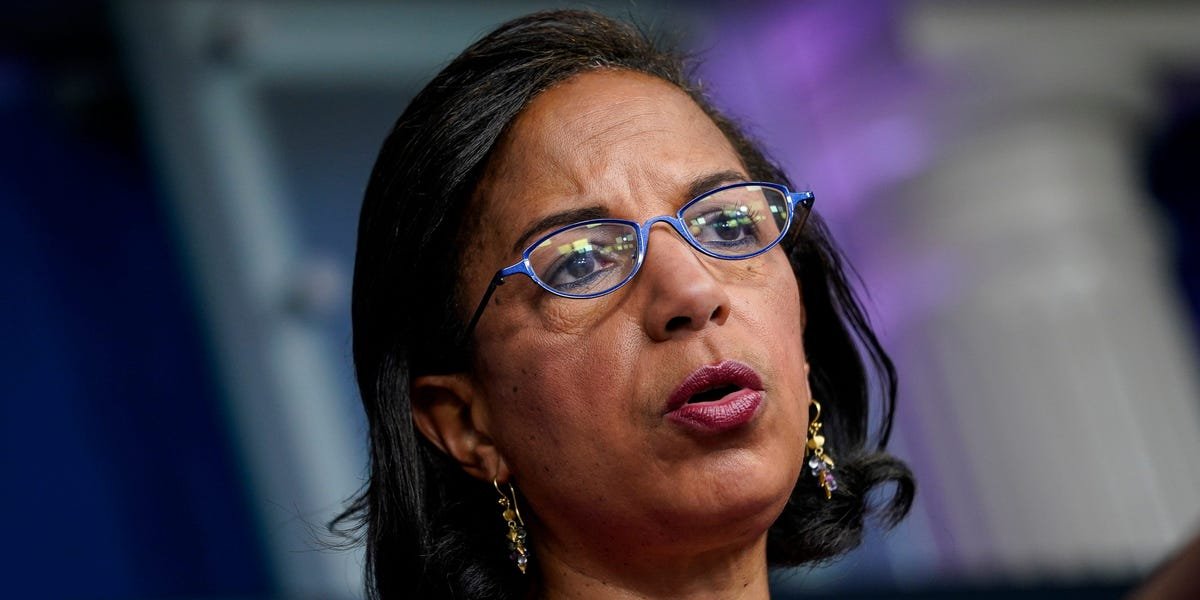
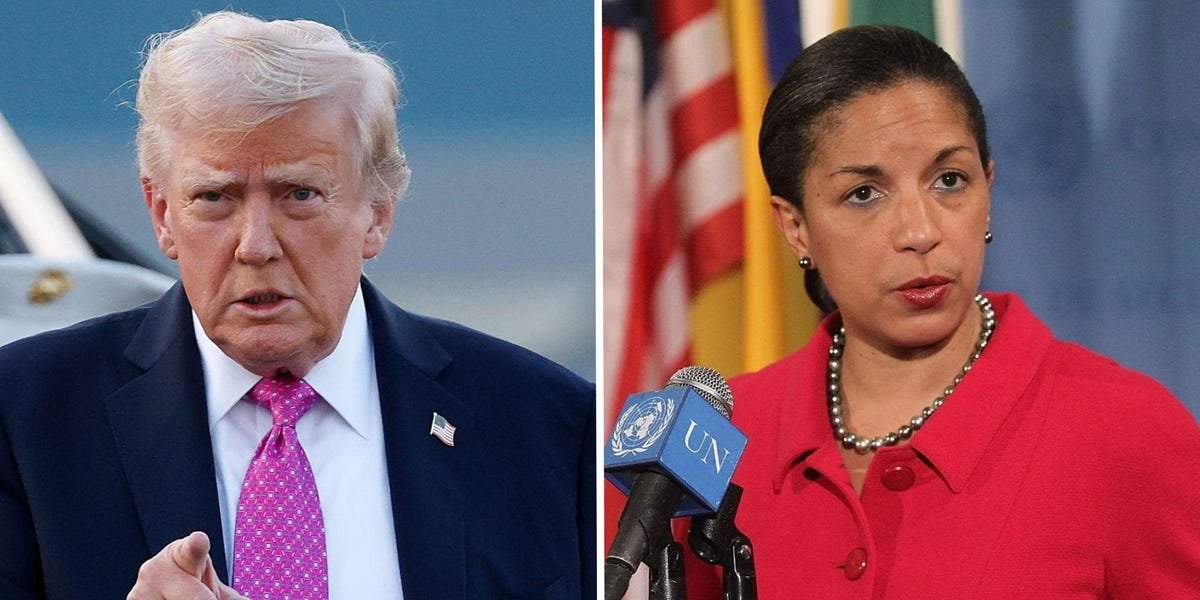
President Donald Trump has warned Netflix to remove former US ambassador and national security advisor Susan Rice from its board “or pay the consequences.”

The stakes are high for Netflix: It’s in the middle of trying to execute a mega-deal to buy Warner Bros.

Rice, who served in senior roles in the Obama and Biden administrations, was critical of Trump’s second term in office when she appeared on the “Stay Tuned with Preet Bharara” podcast in an episode published on Thursday. Rice made comments about corporations that “take a knee to Trump,” saying they could face retribution under a subsequent Democratic administration.

After being alerted to Rice’s comments by far-right activist Laura Loomer, Trump posted: “Netflix should fire racist, Trump Deranged Susan Rice, IMMEDIATELY, or pay the consequences. She’s got no talent or skills – Purely a political hack! HER POWER IS GONE, AND WILL NEVER BE BACK. How much is she being paid, and for what??? Thank you for your attention to this matter. President DJT.”

Loomer’s post highlighted comments Rice made about corporations.

Here’s exactly what Rice said on that topic:

“When it comes to the elites, you know, the corporate interests, the law firms, the universities, the media, I agree with you, Preet, it is not, it’s not going to end well for them. For those that decided that it was, you know, that they would act in their perceived very narrow self-interest, which I would underscore is very short-term self-interest, and, you know, take a knee to Trump, I think they’re now starting to realize, ‘Wait a minute, you know, this is not popular.’
“Trump is not popular. What he is doing, whether on the economy and affordability or on immigration, now, is not popular, and that there is likely to be a swing in the other direction, and they are going to be caught with more than their pants down, they’re going to be held accountable by those who come in opposition to Trump and win at the ballot box.
“And I can tell you Preet, you know, as I talk to leaders in Washington, leaders in our party, leaders in the states, if these corporations think that the Democrats, when they come back in power, are going to, you know, play by the old rules and say, ‘Oh, never mind, we’ll forgive you for all the people you fired, all the policies and principles you’ve violated, all, you know, the laws you’ve skirted,’ I think they’ve got another thing coming.”

Netflix’s pursuit of Warner Bros. would require approval from the Department of Justice’s antitrust division.

Trump in December said that Netflix had a “very big market share,” and that its potential acquisition of Warner Bros. “could be a problem.”

However, this month, he said he “shouldn’t be involved” in the deal and would defer to the Department of Justice to investigate the proposed merger.

Paramount, backed by Trump ally Larry Ellison, the billionaire Oracle cofounder, is also trying to buy Warner Bros.

A White House official told Business Insider last week that Trump “has great relationships with all parties in this potential transaction and remains neutral in this process with no preference for either bidder.”

Netflix’s co-CEO Ted Sarandos said on a podcast appearance last week that Trump had not asked for any political concessions related to the deal.

‘I expected it to be very bad’

In the podcast interview, Rice was critical of Trump on many fronts.

When asked what worried her most about the current political situation, Rice said:

“The thing that worries me, perhaps the very most, is the abrogation of the rule of law in this country, and the fact that, you know, we are now living in a lawless society when the authorities of what is an increasingly authoritarian state exercises, you know, personal police forces, to go and execute the will of the President and do so in blatant violation of American citizens constitutional rights, their First Amendment rights, their Second Amendment rights, their Fourth Amendment rights.”
“And when you have, you know, masked armed men busting into the houses of American citizens and ripping people out of their homes in their underwear and beating them and throwing them to the ground and putting them in cars and disappearing them and denying them access to counsel or their families, when you have the same people shooting American citizens in the street for exercising their First Amendment rights, we are in a very different place, and that worries me enormously.
“And what also worries me, Preet is, you won’t be surprised to hear, is that we’re only at the beginning of what I think they may intend to try and that our very elections and our the fundamental elements of our democracy are profoundly at risk.”

When asked for her assessment of the Trump administration’s past 12 months in office, Rice said:

“Well, I expected it to be very bad, and I guess I would confess that it’s probably worse than I anticipated, but not because they’re doing things that surprised me. They told us exactly what they were going to do.”
“You know, recall Trump saying multiple times on the campaign trail, ‘If you vote for me, this one time, you’ll never have to vote again.’ Or his, you know, pledge to use the American military against the quote, ‘enemy within.’
“You know, you had Stephen Miller, foreshadowing not only the use of the Insurrection Act, but potentially the suspension of habeas corpus and the imposition of martial law. All of these are, you know, they tell you, interestingly, where they intend to head.
“But what surprised me is the speed and the efficacy of their efforts to do what they set out to do, and the fact that they have faced very little resistance from members of their own party, from the private sector, from civil society leaders and university heads and law firms and all of the, you know, the pillars of society, media — that have rolled over and played dead or hidden under rocks.
“So I think the speed and the ease with which they’ve made progress on their agenda, which they laid out very clearly in Project 2025, and elsewhere, is what surprised me more than what they’ve tried to do.”

Disclosure: Mathias Döpfner, the CEO of Business Insider’s parent company, is a Netflix board member.


Source link

I-worked-14-hour-days-at-a-startup-A-cancer-diagnosis.jpeg

I worked 14-hour days at a startup. A cancer diagnosis changed how I succeeded at Netflix and Meta.

This is an as-told-to essay based on a conversation with David Ronca, a retired video systems engineer. He spent 12 years at Netflix and six years at Meta. This story has been edited for length and clarity.

My time at a startup in the early years of my engineering career was like a really bad relationship.

I joined a company that specialized in video playback around 2000. I loved working on video. I consider those seven years like going to school, and I came out with a Ph.D. in practical video systems. But it was the hardest seven years I’ve ever had in terms of work demands.

I was told when I joined that it would be really important that you’re seen around here a lot. So I would work until 7, 8, 9 — sometimes until 10 p.m. Then we started hitting delivery schedules, and I was getting to work around 10 in the morning and going home sometimes at 2:30 in the morning. We’re talking 14-hours days, six to seven days a week. Eighty hours a week would’ve been a break.

We didn’t have good direction. We’d be four or five months into solving a hard problem before leadership would stop us and say, “Go work on this instead.” It was madness.

We were using work hours to compensate for really bad decisions.

In January 2004, I started feeling ill. On a Sunday, I didn’t feel so good, and by midweek, I got worse.

On Friday night, January 17, my wife took me to the emergency room. The doctor told me, “This is likely colon cancer.” After the first surgery, he said, “There’s no way you have a tumor like this and it’s not cancer.”

Two weeks earlier, I had been running and feeling great. Within a week, I was in a hospital bed on machines.

It took another week before doctors could do the full surgery. And you spend that time with no idea what they’re going to find. That was a very dark week.

My mother died of breast cancer when she was 48. I was 16. Now, I’m in the hospital at 44. I remember thinking, “History doesn’t repeat, but it rhymes.”

My wife would bring the three kids. My oldest, who was seven, would sit quietly in the room with me. My youngest was two years old. He didn’t really know me.

I was looking at my young son, thinking he’s going to grow up without a dad.

After surgery, they told me it was stage 3 colon cancer. They removed 60% of my colon. There was lymph node metastasis. My five-year survival prognosis was about 25%.

‘I will not work like this’

I went back to work part-time at first.

I was told that I had used up all my sick leave and vacation and was put on California disability, which is around $200 a week.

By that time, this was a company I had spent four years working 24/7 for.

I told my boss, “I’m sorry, I will not do this. I still want to work here, but if I have to leave, I will quit. Because I will not work like this.”

From that point on, I didn’t. And that was the irony of it all.

I feel like I did some of my best engineering after that. The real change was that I was no longer wasting my brainpower and my thinking on junk.

You don’t do good work after 12 hours. You can’t work sustained all-nighters and be productive. The quality of your work is going to suck. I don’t care who you are. For most mere mortals, you try to work those hours, you’re just not going to be doing good work.

I also started making intentional decisions for life, not just work.

I coached soccer for all three of my kids. I went to their games. My daughter did ballet, and we were there all the time. We started planning and taking family vacations — hiking in the mountains, RV road trips, and Maui.

I realized you have to work to have a life, but you have to have a life to work. So you want to stand in the middle of those things.

Hours worked are not a performance metric

In 2007, after several clean scans, I joined Netflix. I delayed accepting the offer until I got my scan report. I didn’t want to change jobs yet because if you have positive liver metastasis, you’d be lucky to get two years.

In my interview, Patty McCord, the chief talent officer at the time, told me, “We don’t value 24/7 work. You won’t be successful here working all the time.”

That was almost foreign to me. But it also didn’t mean we didn’t work hard.

At Netflix, I was part of the early streaming team — maybe 12 to 16 people. We made aggressive schedules, and we didn’t miss them. We launched a Netflix app on the original iPad on Day One within two months.

The culture at the company was: If you have to work 24/7 for us to be successful, you’ve got a problem, and we’ve got a problem, and we’re going to fix it.

Even at Meta, my favorite poster had a silhouette of a rocking horse that said, “Don’t mistake motion for progress.”

In other words, high performance is not measured by how much work you do. It’s measured by how impactful your results are.

This is not to say that it’s wrong to work more than eight hours. Instead, you should understand why you’re working more hours. It should be intentional. Intentional exceptions.

If I were to tell my younger self anything, it would be to make work-life balance part of your DNA. Learn to take time off.

Don’t wait until you have cancer or some other near-death experience to realize this.



Source link

Trump-demands-Netflix-fire-Susan-Rice-from-board-amid-deal.jpeg

Trump demands Netflix fire Susan Rice from board amid deal talks

  • Donald Trump has chimed in on the Netflix deal negotiations, despite previously saying he wouldn’t.
  • In a Saturday Truth Social post, the president said Netflix should fire Susan Rice from its board.
  • Rice on Thursday predicted an “accountability agenda” for corporations that “take a knee” to Trump.

President Donald Trump is calling on Netflix to remove former US Ambassador and national security advisor Susan Rice from its board, sharpening his criticism of the streaming giant as it seeks to merge with Warner Bros. Discovery amid antitrust scrutiny.

In a post on Truth Social, Trump demanded that Netflix “immediately terminate” Rice from its board of directors, “or pay the consequences,” amplifying a message from right-wing activist Laura Loomer. Loomer had urged action against Rice, criticizing her role at the company and pointing to recent remarks she made about Trump and corporate America.

Rice, who served in senior roles in the Obama and Biden administrations, recently warned companies against aligning themselves too closely with Trump. Speaking on Thursday on the “Stay Tuned with Preet Bharara” podcast, she said corporations that “take a knee” to the president and break the law should expect consequences, predicting an “accountability agenda” if Democrats take back power.

The clash comes as the streaming giant pursues a high-stakes merger that will require approval from the Department of Justice’s antitrust division.

Trump in December said that Netflix had a “very big market share,” so its potential acquisition of Warner Bros. “could be a problem.”

However, in February, he said he “shouldn’t be involved” in the deal and would defer to his Department of Justice to investigate the proposed merger, Business Insider previously reported.

Earlier this week, during an appearance on Puck’s “The Town” podcast, Netflix’s co-CEO, Ted Sarandos, said that Trump hadn’t asked for political concessions during discussions of the possible deal, but was focused on bringing jobs back to Hollywood after years of lower production.

Representatives for Netflix and Rice did not immediately respond to requests for comment from Business Insider.


Source link