11-surprising-moments-from-Gordon-Ramsays-new-Netflix-documentary.jpeg

11 surprising moments from Gordon Ramsay’s new Netflix documentary

22 Bishopsgate will feature the restaurants Lucky Cat, Lucky Cat Terrace, Bread Street Kitchen, Restaurant Gordon Ramsay High, and the culinary school Gordon Ramsay Academy.

Lucky Cat is a 250-seat Asian-inspired restaurant, while Lucky Cat Terrace has 60 seats in a rooftop garden with a retractable roof. Restaurant Gordon Ramsay High is a 12-seat fine-dining restaurant, and Bread Street Kitchen will be an all-day brasserie.

Ramsay said he wants to make sure 22 Bishopsgate has “some of the best restaurants in the world.”

“It’s sort of one of my final stakes in the ground, something I’m going to be best remembered for,” he added.

Ramsay, who has a 20-year lease on the building, called it one of the “most fraught projects I’ve ever done.”

“The pressure with this project is that if it doesn’t go to plan, it’s my neck on the line, and I have to guarantee that every penny that we’re borrowing, if it doesn’t work, I have to pay that back personally,” he said.

“We have to create something incredibly special to keep alive for 20 years, without a doubt.”


Source link

Trump-says-hes-staying-out-of-the-fight-between-Netflix.jpeg

Trump says he’s staying out of the fight between Netflix and Paramount to take over Warner Bros. Discovery

President Donald Trump said Netflix and Paramount Skydance have called him about their fight over Warner Bros. Discovery — but he says he’s staying out of it.

“I’ve been called by both sides,” Trump told “NBC Nightly News.” “It’s the two sides, but I’ve decided I shouldn’t be involved. The Justice Department will handle it.”

This is a shift from what Trump said in December of last year.

“They have a very big market share, and when they have Warner Bros., you know, that share goes up a lot so, I don’t know,” Trump said after Netflix made its bid for Warner Bros. Discover. “I’ll be involved in that decision, too. But they have a very big market share.”

The fight for Warner Bros. Discovery, and its well-known IP, has been contentious.

In November of last year, formal bids for the media behemoth were submitted, including those from Netflix and Paramount Skydance — which previously signaled interest in buying Warner Bros. Discovery.

Netflix announced in early December that it would acquire parts of WBD — the studio and streaming — for an equity value of $72 billion ($27.75 per share).

“The seismic cash-and-stock deal, which has a total enterprise value of $82.7 billion, will bring together Netflix’s streaming platform with Warner Bros.’ century-old studio, HBO, HBO Max, and some of the most iconic franchises in film and television,” Business Insider reported when the deal was announced.

Paramount Skydance came in days later with a hostile, all-cash offer of $30 per share for all of WBD, including its cable assets, making its appeal directly to shareholders.

The battle has continued with Netflix revising its deal with an all-cash offer at the same price per share, Paramount Skydance saying Oracle billionaire Larry Ellison was backing its offer, and WBD telling its shareholders to reject the Paramount deal.

No matter how the saga ends, the bids will need to clear regulatory hurdles for the merger — and for now Trump said he’ll leave that to the DOJ.


Source link

Netflix-strengthens-its-Warner-Bros-bid-as-Paramounts-David-Ellison.jpeg

Netflix strengthens its Warner Bros. bid as Paramount’s David Ellison tries to wreck its deal

Netflix is breaking open its piggy bank to keep Paramount Skydance CEO David Ellison from crashing its Warner Bros. deal.

The streaming giant just sweetened its offer for the Warner Bros. studio and HBO by offering all-cash, matching a key feature of Paramount’s hostile bid. Warner Bros.’ board of directors has approved the all-cash bid, and the companies said they expect Warner shareholders to vote on the transaction by April.

“Our revised all-cash agreement will enable an expedited timeline to a stockholder vote and provide greater financial certainty,” Netflix co-CEO Ted Sarandos said in a statement announcing the news.

“Today’s revised merger agreement brings us even closer to combining two of the greatest storytelling companies in the world,” David Zaslav, president and CEO of Warner Bros. Discovery, said in a statement on Tuesday.

While Netflix isn’t raising its bid from $27.75 per share, converting $4.50 per share in stock to cash takes away a variable for Warner Bros. Discovery shareholders. Netflix shares are down 13% since the Warner Bros. deal was made public and have fallen 28% since late October.

Paramount believes its all-cash offer of $30 per share for all of WBD is superior to Netflix’s winning bid for WBD’s key assets, which include its studio, HBO, and HBO Max, but not its TV networks. Ellison has made eight bids for WBD, all of which have been rejected. Paramount is now suing WBD while fighting for spots on its board.

A key remaining point of difference between the two bids hinges on the perceived value of WBD’s networks. Paramount is looking to buy them, while Netflix is not.

If WBD’s cable channels, such as CNN, TNT, and HGTV, are valued at less than $2.25 per share, or $5.9 billion, then Paramount’s proposal appears, at first glance, to be more appealing than Netflix’s. However, WBD has said that it must knock off $1.79 per share from Paramount’s bid to account for costs it would incur by changing course, like a $2.8 billion breakup fee to Netflix. That would mean WBD’s cable networks only need to be worth $0.46 per share for Netflix’s bid to be financially superior in the board’s eyes.

Paramount has argued that the WBD cable networks it wants to buy are worth $0 per share, or only as much as the debt they’re expected to carry. Ellison and company acknowledged “the theoretical possibility” that those TV assets could be worth $0.50 per share.

Most media analysts have a rosier view of WBD’s cable business, valuing its channels anywhere from the low single digits to $3.51 per share. Even a glass-half-empty view based on the valuation of new cable company Versant would put WBD’s networks at $1.20 per share as of last week, a Business Insider analysis found.

Netflix’s updated all-cash offer helps solidify WBD’s decision to choose it, after accounting for the added costs from Paramount’s bid.

Unless WBD shareholders band against its board of directors, Paramount may face pressure to sweeten its offer by raising its bid.


Source link

The-7-best-movies-coming-to-Netflix-in-January.jpeg

The 7 best movies coming to Netflix in January

  • This month on Netflix, watch crime thriller “The Rip,” starring Ben Affleck and Matt Damon.
  • Also available is the rom-com “People We Meet on Vacation.”
  • Plus classics like “Wild Things” and “My Girl.”

This month on Netflix, watch Matt Damon and Ben Affleck play cops in conflict when they come across millions of dollars in “The Rip,” and stream classics like “Wild Things,” “Harry and the Hendersons,” and “My Girl.”

Keep reading for the seven best movies coming to Netflix in January.

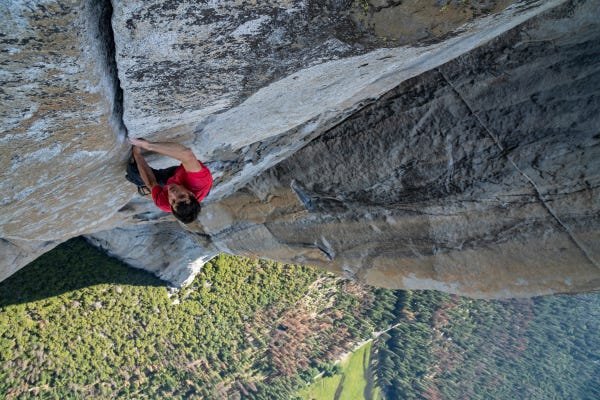
“Free Solo” (January 1)

Alex Honnold in “Free Solo.”

National Geographic

This Oscar-winning documentary profiles prolific rock climber Alex Honnold during his quest to be the first person to ever free solo climb (no ropes or any other protective gear) El Capitan in Yosemite National Park.

Show up for the drama not only in the climb but in Honnold’s life, and stay for the breathtaking visuals captured by directors Elizabeth Chai Vasarhelyi and Jimmy Chin.

“Green Room” (January 1)


Green Room Jeremy Saulnier

Patrick Stewart (center) stars in “Green Room.”

Jeremy Saulnier

From “Rebel Ridge” director Jeremy Saulnier, this thriller follows a punk-rock band who find themselves in a life-or-death situation when they witness a murder by a group of neo-Nazi skinheads and have to fight their way out of the remote club they performed in to escape them.

Anton Yelchin, Imogen Poots, Alia Shawkat, Joe Cole, Callum Turner, and Patrick Stewart star.

“Harry and the Hendersons” (January 1)


Harry and the Hendersons

The Hendersons.

YouTube – Harry and the Hendersons

John Lithgow stars as the patriarch of a family coming home from a camping trip when they hit something with their station wagon: a Bigfoot. They come to befriend the Sasquatch, whom they name Harry, leading to a mad dash to keep Harry safe from a hunter trying to track him down.

“My Girl” (January 1)


Macaulay Culkin and Anna Chlumsky kissing

Macaulay Culkin and Anna Chlumsky in “My Girl.”

Columbia Pictures.

This coming-of-age drama follows the trials and tribulations of 11-year-old Vada (Anna Chlumsky) and her best friend, Thomas (Macaulay Culkin).

The movie is filled with great supporting roles from Dan Aykroyd, Jamie Lee Curtis, and Griffin Dunne.

Just make sure to have tissues ready for the ending.

“Wild Things” (January 1)


Kevin Bacon, Denise Richards, Neve Campbell and Matt Dillon in publicity portrait for the film 'Wild Things', 1998

(L-R) Kevin Bacon, Denise Richards, Neve Campbell, and Matt Dillon star in “Wild Things.”

Columbia Pictures/Getty Images

What has become a sultry cult classic since its release in the late 1990s, this thriller features great performances from Matt Dillon, Neve Campbell, Denise Richards, and Kevin Bacon.

The plot focuses on a high-school guidance counselor (Dillon) trying to clear his name after being accused of rape by two high school girls (Campbell and Richards). But there are a lot of twists and turns, leading to a shocking ending.

“People We Meet on Vacation” (January 9)


Emily Bader in a dress Tom Blyth in a dark jacket and white shirt standing next to each other

Emily Bader and Tom Blyth in “People We Meet on Vacation.”

Daniel Escale/Netflix

In the latest rom-com original on Netflix — and an adaptation of the popular Emily Henry novel — we follow free spirit Poppy (Emily Bader) and planner Alex (Tom Blyth), who, after years of spending summer vacations together, try to figure out if they are more than just friends.

“The Rip” (January 16)


Ben Affleck and Matt Damon dressed as cops in the movie The Rip

(L-R) Matt Damon and Ben Affleck in “The Rip.”

Claire Folger/Netflix

Action director Joe Carnahan (“Narc,” “The Grey”) teams up with Matt Damon and Ben Affleck for this crime thriller, which follows a team of Miami cops who stumble upon a stash of millions of dollars, leading to distrust and a lot of gunfire.

Steve Yeun, Teyana Taylor, Sasha Calle, and Kyle Chandler also star.


Source link

Paramount-wanted-to-use-24-billion-in-Middle-Eastern-money.jpeg

Paramount wanted to use $24 billion in Middle Eastern money to help buy WBD. That’s not why Netflix won.

Larry and David Ellison, who own Paramount, want to use $24 billion in Middle Eastern money to finance their bid for Warner Bros. Discovery. Is that a problem for WBD?

You might think so — especially since $10 billion of that came from the Saudi government. That’s the same government that US intelligence said killed a Washington Post journalist in 2018. The kind of partner you might think a major American media conglomerate would want to keep at arm’s length.

But that’s not a problem WBD raises in its newest communication to shareholders, where it urges them to take the deal offered by Netflix instead.

What actually worries WBD about the Ellisons’ bid isn’t the Ellisons’ particular partners. It’s that the Ellisons had partners.

In a regulatory filing that tells the backstory of the proposed WBD sale, WBD execs and their reps repeatedly told the Ellisons they wanted a firm commitment that Larry Ellison — currently the world’s 5th-richest man, with an estimated net worth of $243 billion — would guarantee the deal himself.

Instead, WBD argues, the Ellisons never gave them the assurances they wanted.

The filing does bring up the fact that money from Middle Eastern sovereign wealth funds would likely complicate regulatory issues for a proposed Ellison/Paramount deal. (Ditto for a proposed $1 billion investment from China’s Tencent, which the Ellisons later took out of their proposal.) But those are presented as technical hurdles. Not moral or patriotic dealbreakers.

And they’re just part of a laundry list of complaints WBD makes about the Ellisons. Among them: A December 2 tweet from New York Post reporter Charlie Gasparino, which WBD said violated a confidentiality agreement Paramount had signed.

And when it comes to the main pitch WBD is making to investors, all of that stuff disappears. It just boils down to “we did our homework, and the Netflix deal is better.”

That’s not shocking: If you’re a WBD investor, you are (supposedly) only interested in getting the maximum value for shares. And WBD’s filing argues that Netflix is the one that can pay the most.

Now we’re waiting to see what the Ellisons do next: Many observers believe they’ll return with yet another, higher bid. Will this one have Gulf money, too?


Source link

Guilty-on-all-counts-Jury-convicts-Netflix-director-Carl-Rinsch.jpeg

Guilty on all counts: Jury convicts Netflix director Carl Rinsch in $11 million fraud case

A Manhattan federal jury on Thursday found Carl Rinsch guilty on charges that he scammed Netflix out of $11 million in a lavish spending spree.

After less than five hours of deliberation, the jury said it found Rinsh guilty on all seven counts, including fraud, money laundering, and illegal money transmission. He faces up to 90 years in prison, but is expected to be sentenced to far less.

Rinsch, wearing a purple-plaid tie and matching pocket square, looked straight at the judge as the jury foreman read the verdict.

The case centered on the millions of dollars Netflix paid Rinsch to film “White Horse,” a sci-fi epic about a world where clone-like beings, after a schism with humankind, create their own society walled off from the rest of the world. Rinsch testified in his own defense earlier this week.

Rinsch — a Ridley Scott protege who previously directed the Keanu Reeves-starring “47 Ronin” — shot footage for “White Horse” on two continents. But by the fall of 2019, he exceeded the $44 million Netflix budgeted for the project and asked for more money.

Through the end of 2019 and early 2020, Rinsch negotiated with Netflix to figure out how to move “White Horse” forward and realize his ambitions. He envisioned a franchise like “Star Wars” and “Game of Thrones,” complete with an elaborate fantasy world, that could become part of Netflix’s catalogue.

In March of 2020, the streaming service agreed to give Rinsch’s production company another $11 million.

Then, everything went wrong.

On the witness stand in Manhattan federal court, he said he believed the bulk of the $11 million was meant to reimburse him for keeping the production of “White Horse” afloat the previous fall, when it had gone over-budget. According to him, Netflix expected him to conduct only “soft pre-production” on a potential second season.

Netflix balked. Former executives testified in the trial that the $11 million was meant to go toward finishing a first season that Rinsch never delivered. According to prosecutors, the entire negotiation for the $11 million was a sham, and Rinsch meant to defraud the company all along.

At closing arguments on Wednesday, Assistant US Attorney David Markewitz presented the jury with a Buzzfeed-style list of “10 Ways You Know Carl Rinsch is Guilty.” In a slideshow, he walked them through what he said were Rinsch’s contradictory claims — on the witness stand, in emails and text messages, and in prior statements in a civil legal dispute with Netflix — that he said demonstrated Rinsch wasn’t telling the truth.

He argued it was absurd to think Rinsch’s lavish purchases — like a $439,000 handmade Hastens mattress — could not have possibly been meant for the production of “White Horse.” And Rinch’s 2021 purchases of Rolls-Royces were insured in his own name, rather than insured by Netflix.

“In a TV show, a mattress is going to be covered by sheets and a blanket,” Markewitz told the jury. “No one watching ‘White Horse’ from home is going to have any idea what is under those linens.”

Daniel McGuinness, an attorney representing Rinsch, told the jury that Rinsch never had the “intent” required to find him guilty.

He showed them emails and texts leading up to the March 2020 agreement that he said demonstrated Rinsch’s negotiating posture had always been that Netflix owed him about $11 million for reimbursement. Rinsch never said he would spend all the money on additional production for “White Horse,” McGuinness said.

In reality, according to McGuinness, the situation was a “contract dispute” based on misunderstandings between Rinsch and Netflix.

“They were talking past each other, and the government has turned it into a nefarious fraud conspiracy,” McGuinness said.

This is a breaking story. Please check back for updates.



Source link

The-memes-are-flying-about-the-Netflix-and-Paramount-bidding.jpeg

The memes are flying about the Netflix and Paramount bidding battle for Warner Bros. Discovery

The Hollywood bidding war between Paramount Skydance and Netflix has created a meme frenzy.

The two media giants are in an all-out battle for Warner Bros. Discovery after it accepted Netflix’s offer to acquire its studio and streaming businesses for an equity value of $72 billion. David Ellison’s Paramount launched a hostile $30-per-share bid for all of WBD on Monday.

Warner Bros. Discovery owns the Warner Bros. film studio, HBO, the HBO Max streaming service, and TV networks such as CNN, TNT, and TruTV. It confirmed receipt of Paramount’s unsolicited offer on Monday.

Both entities have made their cases on why they’d be the best owner for WBD. Although internet comedians don’t have a say in where the deals land, it hasn’t stopped them from weighing in with viral jokes about the dueling companies and their quest to acquire WBD.

Some social media users are poking fun at the back-and-forth with memes about how far each company is willing to go to gain WBD’s favor. One post compared the battle for the best offer to a scene from the HBO business drama “Succession,” a title Netflix would own if the deal goes through.

The Instagram meme account Litquidity used parody images that appeared to be AI-created of two business leaders speaking at the DealBook Summit to mock how each company is trying to prove its offer is better.

Some people seem to be using humor to cope with the idea of more consolidation in Hollywood. They are pushing back on both offers with memes about stopping the looming acquisition completely.

“I’m putting together a team to fight the Netflix Warner Bros merger,” one X user captioned a compilation video of various actors and famous filmmakers.

Others speculated on what the movie-watching experience could be like under Warner Bros. Discovery’s new ownership. One TikTok video showed a man sitting down to watch a movie, only for the intros to include a confusing mix of studios, backers such as Saudi Arabia’s Public Investment Fund, and even a DJ, being played before the movie began.

In the midst of all the jokes, Netflix argues that its offer would be better for consumers and creators, while Ellison says Paramount is more likely to win regulatory approval and offers Hollywood more certainty.

What all of this means in the long run is unclear so far. It could lead to job cuts in the entertainment industry as the giants consolidate their power. The trends of streaming services getting pricier and fewer movies hitting theaters could also continue, as companies release less content, Business Insider previously reported.

Either way — as with many serious big business deals — consumers and industry insiders are finding ways to laugh through it.


Source link

Netflix-co-CEO-Ted-Sarandos-reveals-how-he-personally-pitched-Trump.jpeg

Netflix co-CEO Ted Sarandos reveals how he personally pitched Trump on the Warner Bros. deal

Before Netflix made its winning bid for Warner Bros., its co-CEO pitched President Donald Trump directly on the merits of the deal.

The pair found common ground, Netflix co-CEO Ted Sarandos said.

“The president’s interests in this are the same as ours, which is to create and protect jobs,” Sarandos said of Trump at the UBS media conference on Monday afternoon.

Sarandos said he’d talked to Trump “many times since the election about the different challenges facing the entertainment industry.”

“The president cares deeply about the entertainment industry, and he loves the entertainment industry,” Sarandos continued.

Trump praised Sarandos on Sunday, calling him a “great person” who he said had done “one of the greatest jobs in the history of movies.” Still, Trump said Netflix’s “big market share” in the streaming space “could be a problem” as it tries to buy Warner Bros. Discovery’s streaming and studio assets.

The Netflix-Warner Bros. deal reached on Friday is worth $82.7 billion, including $72 billion in equity. WBD’s TV networks like CNN or HGTV, aren’t in the proposal.

Rival suitor Paramount Skydance responded on Monday with a hostile bid in the form of a $30-per-share, all-cash offer for all of WBD, including the declining TV networks. Netflix’s offer is $27.75 per share, comprising mostly cash and some stock. There’s debate among analysts about whether Netflix’s or Paramount’s renewed offer is more attractive, as it depends on the value of WBD’s TV networks.

Paramount’s move “was entirely expected,” Sarandos said.

Paramount CEO David Ellison, who Trump has publicly praised, went on CNBC on Monday morning to tout his company’s offer as “pro-consumer, pro-creative talent,” and “pro-competition.” Ellison said his company’s offer had “faster regulatory certainty to close” than Netflix’s. Ellison’s father, Oracle cofounder Larry Ellison, is a longtime Trump ally and one of the richest people on the planet.

However, Netflix also seems to be building rapport with Trump. That could help explain why Netflix’s Sarandos and fellow co-CEO Greg Peters are optimistic about their deal.

“We are very confident that regulators should, and will, approve it,” Peters said of the WBD deal.

Sarandos pitched the streaming giant’s proposed acquisition as a net positive for the labor market, despite the concerns of many in Hollywood. He also said the company is “deeply committed” to releasing movies from Warner Bros. in theaters, “exactly the way they’ve released those movies today.”

That overture could help ease Trump’s concerns. Sarandos pitched Netflix as a great job saver.

“What the president has been interested in, in this deal, has been: To what extent does it protect and create jobs in America?” Sarandos said.

Sarandos warned that Ellison would implement lots of layoffs if his bid won and said the Paramount CEO promised about $6 billion in cost savings from a WBD deal. Those so-called “synergies,” in analyst jargon, translate to a smaller workforce, Sarandos said.

“Where do you think synergies come from? Cutting jobs,” Sarandos said. “We’re not cutting jobs — we’re making jobs.”

Netflix has promised investors $2 billion to $3 billion in its own cost savings from its Warner Bros. deal, however.


Source link

This-years-Netflix-holiday-movies-ranked-from-worst-to-best.jpeg

This year’s Netflix holiday movies ranked from worst to best

People have been describing “My Secret Santa” (a title that doesn’t even make sense, by the way) as the “reverse ‘Mrs. Doubtfire.'”

To that I say: just go watch “Mrs. Doubtfire.”

My list of notes, observations, and questions was by far the longest for this movie, which stars Alexandra Breckenridge as Taylor Jacobsen, a single mom (and former teen rock star, somehow), who decides her daughter must go to an exorbitantly expensive snowboarding school at a ski resort, and the only job she can find requires dressing up as an old man to become the resort’s resident Santa Claus.

Along the way, she meets a man, Matthew (Ryan Eggold), who is quite determined to get to know her — for truly no reason besides the fact that she’s pretty — but, gasp, he turns out to be the resort owner’s son.

This might all sound pretty normal, but believe me, this movie seems like it was written backward. As in, since they needed Taylor to have access to some of the best prosthetics since “Frankenstein,” her brother and his husband happen to be obsessed with Halloween.

Also, Taylor was just really bad at being Santa for too much of the runtime.

This brings me to the villain, Natasha, as played by Tia Mowry. She’s hyper-competent, dedicated to her job, and has been at the resort for years. But when it’s time for someone to get a promotion, Matthew the Nepo Baby gets it instead. Was I supposed to not root for her as she tried to sabotage his (quite poor) attempts at running things? Because I did not! She deserved the promotion!

Ultimately, this movie is deranged (but not in a fun way), the two leads have no chemistry, and it makes the cardinal sin of evoking a much better movie. It was a skip from me.


Source link