kelly burch

We bought a family business for $40,000 and moved to Boise. We are raising our daughter to know it’s OK to take risks.

This as-told-to essay is based on a conversation with Heather Schoonover, owner of Painting With a Twist in Boise. It has been edited for length and clarity.

Three years ago, my husband Levi got a call from family. His uncle had died, and the family was preparing to sell his business, which produced trophies and medals. They just wanted to be rid of it and were going to sell it for about $40,000.

That was less than the truck we were considering purchasing. And unlike a truck, the business was something we hoped would appreciate in value. So, Levi and I loaded into a half-finished 1957 Airstream trailer and moved seven hours from our home in northern Idaho to Boise, where the business was located.


Trophy business

Heather Schoonover and her husband parked their Airstream inside the trophy business they bought. 

Courtesy of Heather Schoonover


We parked the Airstream inside the warehouse for the trophy business and lived there for a year. Sometimes we wondered what we had done, especially since the first year, the trophy business only netted about $35,000. But the year after that, we doubled our profits, then doubled again. That’s when we started to think we had made the right decision.

We decided to open a paint and sip studio since there wasn’t one

When we moved to Boise, we were eager to make new friends. I have a background working at paint-and-sip art studios, and we thought that would be a great place to meet people. We were surprised to learn that there wasn’t a paint-and-sip in Boise.

Gradually, we met others, and I started hosting paint-and-sip events right in the warehouse, next to our airstream. I was only charging for materials, not making any money, but people loved it. We could immediately see another business opportunity.

Having a franchise was helpful when I had a baby

We were still in the trenches of resuscitating the trophy business, so we decided to look into franchises. Ultimately, we thought that would help us have more flexibility. We wanted to own the paint-and-sip business without being tied to working there every day. Having a proven model seemed to be the option that would get us to that goal the fastest.

It was definitely the right choice. Finding a location in Boise took longer than we wanted, but our franchise company, Painting With A Twist, helped us stay focused on finding the right space and then negotiating a lease once we found it.

I found out I was pregnant the day before the grand opening. Because we had the franchise’s resources, we were able to stay open and even continue making money during my maternity leave. Having a baby and a new business in the same year would have been a million times more stressful if we were on our own.

Owning businesses gives us more control over our time

For Levi and me, success means owning our own time. Running two businesses — plus rental properties — demands a lot of time, but also gives us freedom. We can get lunch together. Before our daughter was born, Levi would bartend at paint-and-sip nights just so we could spend time together.

Having freedom in how we spend time has become even more important now that we have a baby. Our businesses have complementary schedules, so I often watch the baby while Levi works at the trophy business during the day, then I head to Painting With A Twist at night while he’s home with her.


Dog living in Airstream

Courtesy of Heather Schoonover


We want our daughter to know it’s OK to take risks. We went from working stable jobs and living in a nice house to running our own businesses while living in a half-finished trailer with two big dogs. Although it wasn’t glamorous, it led to opportunities and a community we love here in Boise.

We never want to look back and think “we wish we tried that.” We’d rather take the leap and try to figure it out together.

Source link

I-felt-unprepared-when-I-moved-into-my-first-apartment.jpeg

I felt unprepared when I moved into my first apartment. Living alone has been challenging, but also incredibly rewarding.

I’ll be honest — when I moved into my first apartment after graduating from college, I didn’t know the difference between Tide and Cascade pods, or how to use a plunger.

But to be fair, I didn’t have the “typical” college experience.

The COVID-19 pandemic prevented me from staying in the dorms in 2020, and even after campus reopened, the cost and comfort of living with my parents kept me home through the end of junior year.

Instead of fostering independence as I’d planned, I continued residing at home, with my family taking care of me, cooking meals, running the washing machine, and restocking my favorite cereal.

By senior year, I felt pressure to move out and grow up

I was raised in Manhattan, and when I decided to go to school just one subway stop away from home, I felt behind in some metaphorical “race” to grow up.

Everyone I knew was out of town, joining sororities and exploring new territory, while I was stuck in the past.

By senior year of college, all my friends were either living in the dorms or in their own places, but I was still at home.

So, as I entered my final year of school, I decided to start looking for a place of my own, without my parents’ assistance. I felt like I would never truly consider myself a real “adult” unless I took on the process by myself.

After a few touring mishaps, the third apartment building I visited seemed like the perfect fit. It wasn’t furnished yet, but it already felt like home. It even had wooden floors that reminded me of the room I grew up in. I signed my lease one week later.


An empty apartment with white walls and wooden floors.

The apartment felt like home before I even furnished it.

Carrie Berk


However, I quickly became overwhelmed by the moving process. As I stared at boxes piled to the ceiling, I didn’t know where to start.

I started tackling the space, excited to see my NYC-style Barbie Dream House vision come to life. But the more I unpacked, the more things began to fall apart.

My mattress delivery was delayed, the trendy LED-adorned bed frame I picked out didn’t fit through the doorway, and my WiFi didn’t work. Oh, and instead of pink kitchen tools, I’d accidentally ordered green.

It felt like no matter how hard I tried, I couldn’t get anything right. I started to wonder if moving out was a mistake. Maybe I just wasn’t ready for the responsibility.

The first evening I spent alone in the apartment, I broke down. As I stared at half-open boxes, a TV that wasn’t operating properly, and an empty bedroom, my life felt out of place.

I was in the eye of the hurricane when it came to adulting, and it felt like I would never be able to figure things out on my own. But then I realized — maybe I didn’t have to.

I thought pushing my parents away would make me feel more grown up, but I learned asking for help is healthy and normal. I delegated tasks: my dad helped me fix my router, my mom accompanied me to Home Depot to purchase new utensils, and my friends even pitched in to help me find a new bed frame.

Once they set me up for success, I felt much less overwhelmed. My home began to come together, and instead of feeling scared, I was excited to embark on this new adventure.

Living alone has still presented its challenges, but I’ve learned to embrace the chaos


A bedroom with gray and pink bedding and white furniture.

It took some time to adjust to living alone.

Carrie Berk


I’ll be honest — when my parents, friends, and the movers were all gone, it was pretty disheartening. As I sat in the quiet of my apartment, merely hours after I had officially moved in, I missed the buzz.

I never thought I would say it, but I craved the noise of my dad blasting football on the television or my mom squeezing my dog’s toy. The silence felt deafening. But as days passed, I began to find peace in the quiet.

Now, I savor solo moments that I might not have had the chance to enjoy while living with my family.

I can play my Peloton class at full volume without disturbing anyone and experiment in the kitchen without my mom roasting my cooking skills. To be honest, though, curating a menu beyond scrambled eggs or a toasted bagel is still a work in progress.


A small kitchen with a heart-shaped sign on the wall that reads

Learning to cook is still a work in progress.

Carrie Berk


Now, I’ve found that solo living has become less scary and more of a superpower. As I take care of my home, I’m instilled with a new sense of empowerment that fuels other areas of my life.

If I can budget to pay my rent, then surely, I can learn how to save money for international travel. If I can practice patience in communicating with my landlord about maintenance issues, I can also extend those lessons toward work.

Plus, learning how to clean spills on the rug was a major help when I eventually started a side hustle as a dog sitter.

I’ve learned to embrace the chaos and celebrate the small wins rather than put myself down for my failures.

Now, as I stare out at my fully-furnished space, I’m proud of what I’ve accomplished, and I’m looking forward to continuing to grow in the comfort of my very own home.


Source link

I-quit-my-job-because-I-couldnt-afford-to-rent.jpeg

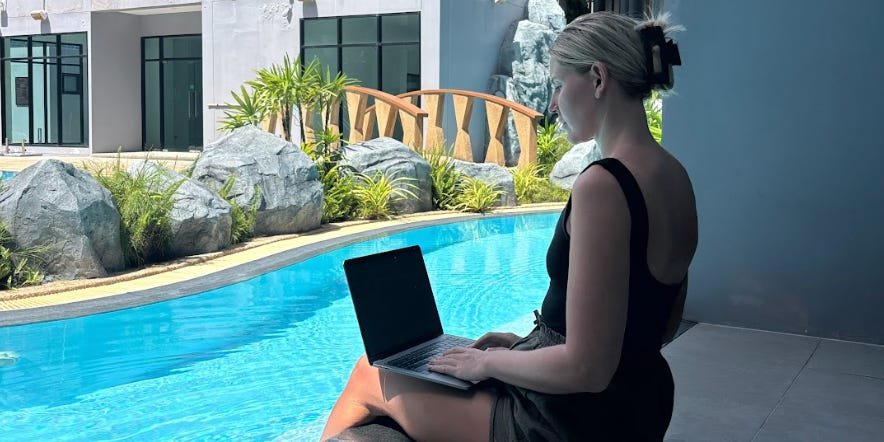
I quit my job because I couldn’t afford to rent or buy a house. I then moved to Thailand, where the cost of living is cheaper.

My stable job in the UK allowed me to save, but rental prices in my area would have taken up a huge portion of my income. Each month, I withdrew from my savings as everyday expenses became luxuries. I still had bills to pay, such as car finance, insurance, gas, phone, and a contribution to my parents’ mortgage.

I couldn’t move out of my parents’ house at 28. My goal was to buy my own place, but this was unrealistic. Renting was just as high as a monthly mortgage payment. Saving for a down payment while renting in the UK was impossible on a single average salary.

Even though I was employed, I couldn’t afford the life I wanted. I felt like I was surviving, not living. I was craving financial freedom and independence, but the UK couldn’t offer them.

Two years prior, I had traveled around Thailand and fallen in love with the food, the pace of life, and the value for money. It was a country that had always been on my mind, and eventually I reached a point where I couldn’t live comfortably in the UK anymore. I felt financially stuck and embarrassed that I was still living with my parents.

The only way out was to quit my job, become a freelancer, and relocate to Bangkok — a city filled with opportunity where housing costs half as much as in the UK.

Staying in the UK no longer felt sustainable

For months, I was figuring out what to do. I could spend years trying to catch up, or I could change my environment and live a more affordable lifestyle.

After researching Thailand and reminiscing about my travels there, I realized it was the perfect country to start my own business as a freelance writer.

While I was backpacking there previously, I ate freshly cooked meals for as little as $1. I looked into rental listings in Bangkok, and I was shocked. A modern one-bedroom condominium with a gym and swimming pool costs as little as $400 a month.


Sally seaton sitting at a table in a restaurant with bangkok skyline in the background

The author in Thailand.


In comparison, the average rent in my area of the UK was around $1,200 — more than a third of my monthly salary before bills. In Bangkok, I could pay half that and have more space and amenities.

I had been building a freelance writing business alongside my 9 to 5 job to create freedom to live in Thailand. By the time I decided to leave, I had one client secured. It didn’t guarantee stability, but there was no positive future for me in the UK.

Last June, I handed in my notice and booked a one-way flight to Bangkok. Within a month, I said my goodbyes, packed up my life, and left the UK behind.

My life in Thailand costs less, I get more, and I’m happier

Moving to a new country alone and starting my own business was terrifying, but I knew it would eventually give me the financial independence I couldn’t find in the UK.

Now that I’m my own boss, I still work hard. But the difference is that I’m building something for myself. In the eight months I’ve lived in Bangkok, my client base has grown. I earn slightly less, but my money stretches further.

I rent my own condominium for $500 a month, which includes a swimming pool, a gym, and a coworking space. My electricity bill is $40 a month, and water costs just $2.

Things that once felt like luxury in the UK are now part of my everyday life. I buy fresh fruit from local markets. I pay $6 an hour for a weekly cleaner. I don’t cook; I eat out every day without calculating whether I should skip it to save money.

Getting around is affordable, too. I no longer own a car. A train journey costs around $1, and bike rental rides start at $1.

Since moving to Thailand, I’ve embraced what the Thais call “sabai sabai” — a stress-free way of life. For the first time in years, I feel fulfilled, financially free, and happy.


Source link

We-moved-our-family-of-4-from-the-US-to.jpeg

We moved our family of 4 from the US to Spain. Looking back, there are 5 things I really wish we’d done before we left.

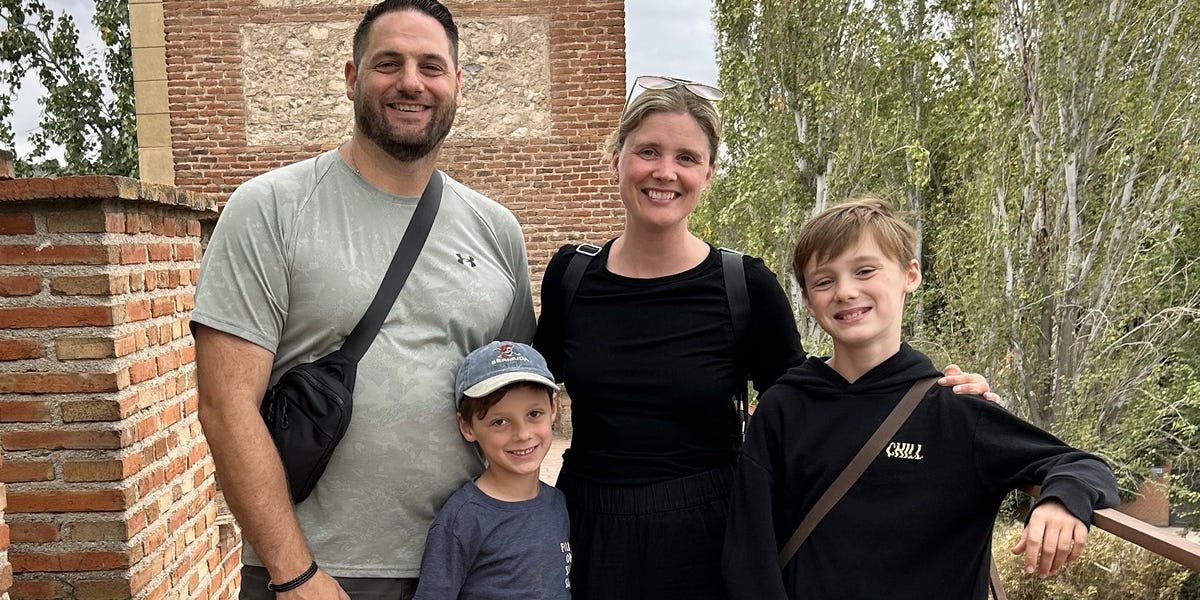
When my husband and I decided to move our four-person family from the US to Spain, we had roughly two semesters of college Spanish between us and zero experience living abroad.

We didn’t let that stop us, though. Beginning in March 2025, we researched obsessively, read books, made spreadsheets, and put together lists of pros and cons. The more research we did, the more confident we became that Spain was the correct place for our family.

Five months later, we packed up our lives and moved our 6- and 9-year-old sons from Northford, Connecticut, to Las Rozas de Madrid, a suburb northwest of the Spanish capital.

Despite our extensive preparation, lessons awaited us. After all, there’s so much to consider while moving abroad (especially with kids), and slipups are unavoidable.

That said, here are five mistakes I wish I’d avoided when my family moved.

I wish I’d started building my community abroad before we left

Between selling our home in Connecticut, finding a place to live in Spain, and figuring out where our sons would enroll in school, I deprioritized my new social life.

I assumed we’d naturally meet people once we got here, and we eventually did. But those first few months were lonely.

We arrived in August, a month before my sons’ school year started, and many locals were still away on summer trips. Once school started, it became easier to connect with other families. I also joined a few WhatsApp groups recommended to me by other expats.

I’m still very much in the early stages of building a network here. If I were doing the move over, I’d join related regional and professional groups, connect with families in our area, and start building relationships before I even left the US.

Having even one friend waiting for me in Spain would’ve made a huge difference.

My husband and I didn’t ask the right questions about our sons’ school curricula


Rebecca Cretella and her family in Spain

Both of my sons are enrolled in an international school in Spain.

Rebecca Cretella


My husband and I planned to start our boys in an international school to ease their transition into a new country and language, with the goal of eventually moving them into a local Spanish school once they were fluent.

We selected an international private school that follows an International Baccalaureate (IB) curriculum with Spanish language support. It seemed like the perfect fit — until we realized we hadn’t asked the right questions.

We failed to realize that our boys, who didn’t arrive speaking Spanish, would be learning alongside native speakers rather than building introductory skills.

They’re getting an incredible education in Spain, but it’s not the foundational language curriculum we expected. We now supplement school with online Spanish tutoring twice a week to fill the gap.

To other parents moving their school-age kids abroad to Spain, I’d recommend asking specifically about language use and requesting sample lesson plans before enrolling to see what language support looks like in practice.

Translating important documents into the local language would’ve been extremely helpful

Four months after moving, I had to undergo emergency surgery. I felt completely unprepared as I relied on Google Translate and my husband’s elementary Spanish language skills to communicate with staff.

We got through it, but “getting through it” isn’t the same as feeling safe, understood, and informed.

The scariest moment in the ER was right before I went under anesthesia. I was crying because I couldn’t understand what the professionals were saying, couldn’t communicate my allergies or medical history, and didn’t know what was about to happen.

Luckily, the staff took good care of me, but the experience was harder and more frightening than it needed to be.

Before I left the US, I should have saved a translated medical profile with my allergies, medications, and past surgeries on my phone.

I also should’ve researched how to access medical translation services, so that if something unexpected happens, I wouldn’t have to figure it out in the middle of a crisis.

We didn’t know that we couldn’t rent a car without a special driving permit


Rebecca Cretella and her husband in Spain

Before moving to Spain, my husband and I had never lived abroad.

Rebecca Cretella


Las Rozas de Madrid is well-connected, so my family doesn’t own a car here. When we went to rent one for a holiday trip to Cádiz, we assumed we could do so using our US driver’s licenses, but we were wrong.

Without an International Driving Permit, renting a car was off the table. We made the best of the situation, but we were restricted in what we could see and do in Cádiz.

I regret not getting an International Driving Permit before leaving the US. It’s easy and costs $20.

Canceling our US numbers created a logistical nightmare

My husband and I both canceled our US phone numbers when we left the country, thinking we’d just use Spanish numbers instead. It was a big mistake.

Accessing our US banks and some key services required us to complete text verifications with our US numbers. So, we’ve gotten locked out of accounts, struggled with two-factor authentication, and spent hours on international calls trying to fix it.

Rather than canceling my number, I wish I’d ported it, which would’ve let me move it to an online service while keeping my number, to save us endless headaches.

Even with all the mistakes we’ve made, I’m glad my family made the move

Six months into our new life in Spain, one thing is certain: I’m so grateful for this journey.

Seeing my kids build new friendships, learn a new language, explore new places, try new foods, and gain confidence as their world expands has made every misstep worth it.

Now, we look back on them as part of our story.


Source link

Im-an-American-who-moved-to-the-UK-5-years.jpeg

I’m an American who moved to the UK 5 years ago. Here are 9 things I wish I’d known before living abroad.

  • After spending most of my life in the US, I moved to the English countryside five years ago.
  • I expected a culture shift, but I didn’t realize that even small talk would look different here.
  • I wish I’d known that many groceries here tend to expire faster and that I’d be walking much more.

Having grown up watching the “Harry Potter” movies and “The Parent Trap” on repeat, part of me always dreamed of moving to England — but the reality of living here has been full of ups and downs.

I was born and raised in Portland, Oregon, and went to college in Orange County, California. I lived abroad for a couple of years before meeting my British husband and settling down in the UK countryside.

Even though the lack of a language barrier made this an easier adjustment than some of my other moves, there have still been more moments of culture shock than I expected.

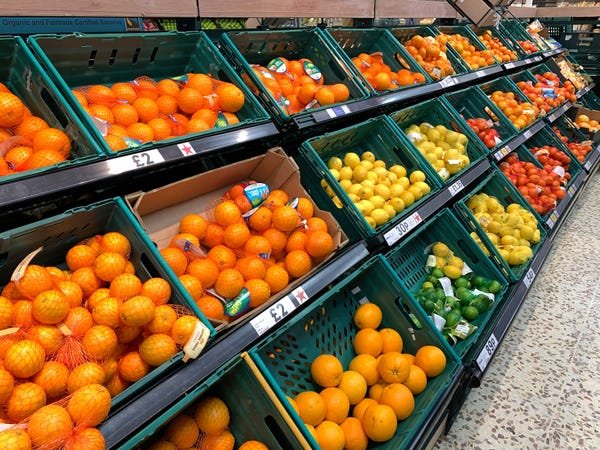
Groceries seem to expire faster, but they taste fresher.

In my experience, groceries in the UK taste much fresher.

Wirestock Creators/Shutterstock

I’ve found that some perishables can go stale very quickly here. Part of the reason is that a lot of the preservatives we add to produce in the US aren’t allowed in the UK.

Though a chicken breast or parsley would have lasted me at least a week in the US, these same goods expire within three to four days in the UK.

This has made grocery shopping a new kind of challenge, but my meals taste a lot fresher.

Non-gel, roll-on deodorant feels practically nonexistent.


A drugstore aisle in the UK.

Since moving to the UK, I’ve had a difficult time finding my favorite type of deodorant.

1000 Words/Shutterstock

One thing that was nearly impossible to find for my first three years living in the UK? A non-aerosol deodorant.

I came across a couple of sticks (also called roll-ons) in stores here, but the formulas were all gel-based. Now, whenever I’m back in the US, I stock up on my favorite non-gel, roll-on deodorants.

Conversational language is very different.


The writer poses in front of the doorway to a garden in the UK.

I was surprised to learn that casual communication is pretty different in the UK.

Nishaa Sharma

I came to the UK knowing that some words would take on new meanings: Underwear would become “pants,” for instance, and pants would become “trousers.”

Still, I didn’t expect casual small talk to look so different. It’s not uncommon to hear “You all right?” or “You OK?” while patronizing a supermarket or café.

As I quickly learned, people asking these questions usually aren’t worried about me having a bad day. They’re basically asking, “What’s up?”

The humor is much drier.


A close-up of people's hands holding pints of beer and cheersing.

I’ve had a few uncomfortable moments adjusting to British humor.

Tint Media/Shutterstock

I don’t have the strongest sarcasm detector, which made adjusting to the British sense of humor a challenge.

It took me a solid two years to get used to the self-deprecating, dry jokes here. As a sensitive soul used to America’s brand of straightforward humor, I even had to ask those around me to dial down the jabs.

Almost everything closes early — especially on Sundays.


A town center in the UK.

Even fast-food restaurants tend to close at about 10 or 11 p.m. in my UK town.

Pete Stuart/Shutterstock

Outside major cities such as London, Birmingham, and Manchester, it’s unusual to find shops open after 5 p.m. — or 6 p.m., if you’re lucky. Even grocery stores typically close by 8 p.m. on weekdays.

On Sundays, most local shops and eateries shut down even earlier. Pubs typically serve Sunday roast dinner between 12 and 4 p.m., and the average town center is fully quiet by 4 p.m.

This was an adjustment for me. Growing up in Oregon, grocery stores were typically open until 9 p.m., and some near my college in Southern California didn’t even close until 1 a.m.

I find myself walking much more often.


A nature trail in the UK.

There’s no shortage of nature trails throughout the UK.

edhphotography/Shutterstock

In most of the US, having a car is a necessity.

In the UK, meanwhile, many of the town centers I’ve lived around — and explored — are designed to be more walkable, with roads limited to pedestrian, bus, and cyclist access only.

The UK’s walking culture has also affected my social life and leisure activities. Though I lived near some beautiful greenery in the US, I often had to drive to visit a walkable nature trail.

Here in Southwest England, though, I’ve found many nature pathways in both bigger cities and smaller towns. Now, walks are a major part of our weekends and social lives.

The average salary is lower here — but the PTO allowances are higher.


A town street in Somerset, UK.

I was surprised and disappointed by UK salaries.

Helen Hotson/Shutterstock

One of the biggest drawbacks of living and working in the UK is that the pay is generally lower.

For example, according to data from the Office for National Statistics, the median household income in the UK in 2024 was £36,700.

The same year, census data showed that the median household income in the US was just over $83,000 — a salary that would’ve been worth at least £60,000 at the time.

On the plus side, full-time employees receive a minimum of 28 paid days off a year here in the UK, whereas US workers aren’t guaranteed any.

We also have a universal healthcare system in the UK, which helps bridge the pay gap in some ways.

The country feels pretty well-connected by public transportation.


Tower Bridge in London on a cloudy day.

Whenever I travel to London, I have an easy time getting around.

Nishaa Sharma

Even though I live in a remote town in the countryside, accessing the major cities is still easy. Many of the UK’s buses and trains run almost every hour.

Whenever I’m in London, I find the nation’s capital easier to navigate than many US cities. The city’s tube system is intuitive and fast, with tubes departing roughly every five minutes.

On the other hand, many trains I’d used to travel between US cities felt slower and more outdated. When I was in college, even getting around a major city such as Los Angeles felt next to impossible without a car.

Still, trains within the UK cost more than flights to mainland Europe.


A train on an autumn day in the UK.

Train prices in the UK can vary.

David Hughes/Shutterstock

Though trains to London are frequent and fast, they can also be really expensive.

A weekday round-trip ticket can cost up to £150 from where I live, nearly triple the price of a budget flight to Spain, Croatia, or Greece.

On the flip side, though, the accessibility of mainland Europe is one of the best parts of living here — and makes planning those extra PTO days I’ve banked much more fun.

This story was originally published on June 2, 2025, and most recently updated on March 9, 2026.


Source link

We-moved-to-Japan-after-nearly-a-decade-of-careful.jpeg

We moved to Japan after nearly a decade of careful planning. Living here is still nothing like we expected.

After a two-week trip in 2015, my husband and I came home completely hooked on Japan.

Reliability was the baseline; trains ran with a clockwork precision that transformed the daily commute into an exercise in discovery. We fell for the profound sense of safety that allowed small children to navigate the streets alone, the atmosphere of the neighborhood shrines, and the level of public order that made everything back home feel chaotic by comparison.

What began as a simple holiday evolved into a total life reset that would take over the next eight years of our lives. We decided Japan wasn’t just a spot to visit but the place we would raise our family.

We stopped saving for the “someday” dream of homeownership in New Zealand and instead invested in the present, putting our money toward several return trips to Japan to scout our new life.

In preparation for our move abroad, we researched local customs and dedicated ourselves to intensive language study. My husband and I enrolled in university-level courses, while we arranged private tutoring for our daughter to give her the best possible start.

We convinced ourselves that if we planned carefully enough, nothing would catch us off guard. By the time the move finally happened in 2023, my husband and I, along with my daughter, felt ready for anything.

We assumed the hardest part would be the logistics of moving and that first wave of culture shock. After two and a half years of actually living here, I’ve learned we weren’t even close.

You cannot plan for a change in identity


New Zealand passports

My husband and I spent almost a whole decade preparing to move to Japan.

Kerri King


I’ve always liked to feel prepared and in control, which is probably why it took me eight years to feel ready to leave New Zealand.

Before we moved, I researched everything I could think of, from how Japan’s specialized health clinics differed from our general practices in New Zealand to the specific paperwork required for city office registrations.

I watched vlogs of people sharing their grocery hauls in Tokyo, noting the prices of staples like milk and eggs, and read blog posts detailing a day in the life of expats in Japan.

Talk of culture shock and language barriers didn’t scare me, as practical problems often have practical solutions. What I couldn’t have anticipated was how living abroad would make me feel like an imposter.

On the surface, I looked confident and capable, sharing photos of our newest adventures with friends and family on social media. In reality, even small, daily interactions left me panicked and second-guessing myself.

My heart would race whenever someone asked me a question, and I couldn’t find the words to respond.

I felt embarrassed every time I had to rely on Google Translate at the supermarket or to make sense of yet another form. A parcel even sat on my bedroom floor, undelivered, for six months because I was too intimidated to figure out the local post-office process.

For someone who built her identity around independence, constantly needing help from others felt frustrating and humiliating.

Being the parent at school who needed things repeated, the customer holding up the line, or the one relying on her husband to translate slowly chipped away at my confidence.

Living without a support system is harder than I thought


Kerri and Dylan King at Kobe Steelers Rugby Game

As much as we love Japan, it’s tough to be far from home.

Kerri King


That same fierce independence I’d always been proud of also meant I didn’t prioritize building a support network when we arrived in Japan.

I assumed friendships would happen the way they always had — through school events, casual chats, and repeated proximity. I figured I’d naturally end up grabbing coffee with a few people, even if the coffee wasn’t quite as good as New Zealand’s.

It turns out friendships are harder to build when language and cultural barriers sit between every conversation.

So instead, I buried myself in work and told myself I was too busy to socialize. Our family travelled most weekends, which made it easy to stay occupied and harder to admit I felt lonely.

The few friends I have made, I love dearly. However, deep friendships take time, and life feels heavier when you don’t have someone nearby to lean on.

That absence felt sharpest when my grandmother passed away in 2024, and I couldn’t show up for my family. I wasn’t able to cook meals for my mum, sit with my grandfather, or say goodbye properly.

Grieving from afar isn’t something you can really plan for; you realize too late that a final goodbye is gated behind a 14-hour flight and a four-figure plane ticket.

Despite the small four-hour time difference, the geography of our new life meant I was out of reach when it mattered most.

Japan has made our lives easier in many practical ways. We save money, travel more, and have access to high-quality medical care whenever we need it.

However, all the convenience and travel in the world can’t replace community.

Even our best expectations didn’t survive real life


Man and woman smiling in front of temple in Japan

Japan gave us the frictionless life we dreamed of, but I’ve learned that convenience is a poor substitute for a sense of community.

Kerri King


Before we moved, we thought we’d covered the language gap: My husband completed a four-year Japanese degree, our daughter grew up exposed to the language, and I studied as much as I could.

We assumed that would be enough to get by, and from a practical point of view, it is. I can grocery shop, book appointments, and navigate daily life without much trouble.

However, existing within a community is not the same as belonging in one. At parent meetings and school events, conversations move too quickly for me to follow, and I rarely feel able to contribute anything meaningful.

Over time, I realized language wasn’t the only barrier to belonging.

Understanding the system’s gears didn’t mean I knew how to be one of them. I understood that Japan prioritizes the group over the individual, but adapting to this is a lot harder in practice.

Every time I asked school staff for an exception for my daughter — a quiet corner during assembly or permission for her to wear her noise-cancelling headphones during music classes — the smiles across the table turned thin and rigid. There was no argument, just a heavy, polite wall of silence that told me I’d stepped out of bounds.

It left me in an impossible spot: I was fighting to get her the support she needed, but by speaking up, I was highlighting the very differences I was trying to help her navigate.

Japan has still given us the life we planned for, just not in the ways we expected. Now, we have to decide if the life we worked eight years to build is worth the community we’re living without.

Read more stories about moving abroad


Source link